

The Scenario of Switchgear & Controlgear Manufacturing in India
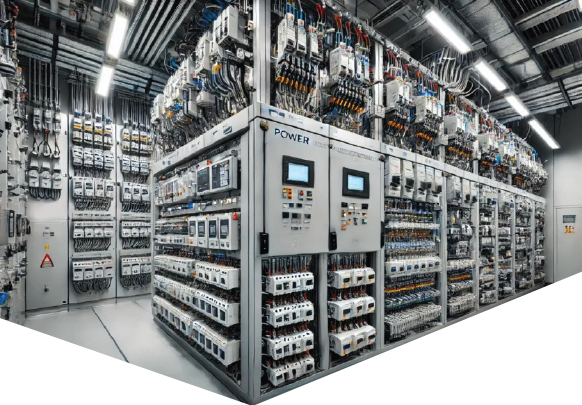
Switchgear and controlgear are critical components in electrical infrastructure, ensuring safety, reliability, and efficiency in power distribution. India, with its rapid industrialization and urbanization, has witnessed a growing demand for these products across various sectors, including power generation, transmission, distribution, industrial automation, and commercial establishments. The Indian switchgear and controlgear industry has evolved significantly, driven by technological advancements, government initiatives, and increasing emphasis on energy efficiency and smart grid development.
Market Overview
The Indian switchgear and controlgear market is expanding at a steady pace, driven by the country’s increasing power demand & electrification projects. The market is segmented into low-voltage (LV), medium-voltage (MV), & high-voltage (HV) switchgear, catering to diverse applications. According to industry estimates, the Indian switchgear market is projected to grow at a CAGR of over 6% in the coming years, supported by infrastructure development, renewable energy integration, and digitalization in power management.
Key Growth Drivers
Infrastructure Development: The government’s push for infrastructure projects, including smart cities, metro rail networks, and industrial corridors, is a significant growth driver for switchgear manufacturing.
Renewable Energy Expansion: India’s commitment to increasing its renewable energy capacity to 500 GW by 2030 necessitates the deployment of advanced switchgear solutions for grid stability and integration.
Power Sector Reforms: Initiatives such as the Revamped Distribution Sector Scheme (RDSS) aim to modernize power distribution networks, boosting demand for advanced switchgear and controlgear.
Industrial Automation and Smart Grids: The adoption of automation, IoT-enabled controlgear, & smart switchgear solutions is transforming energy management in industrial and commercial applications.
Rising Urbanization and Electrification: Rural electrification programs and urban expansion are fueling the demand for reliable and efficient switchgear solutions.
Challenges in the Industry
Despite strong growth prospects, the industry faces several challenges:
- Raw Material Dependency: Dependence on imports for critical components such as insulation materials, semiconductors, and advanced switchgear technologies affects cost and supply chain stability.
- Technological Gaps: While India has made progress in switchgear manufacturing, the development of high-end, technologically advanced products still lags behind global leaders.
- Price Sensitivity: The Indian market is highly price-sensitive, making it challenging for manufacturers to balance cost with quality and innovation.
- Counterfeit Products: The presence of low-quality, counterfeit switchgear products in the market poses safety and reliability concerns.
Innovations and Technological Advancements
The Indian switchgear and controlgear industry is rapidly adopting new technologies to enhance performance, safety, and energy efficiency:
- Smart Switchgear: Integration of IoT, AI, and real-time monitoring capabilities to improve predictive maintenance and energy optimization.
- Compact and Modular Designs: Development of space-saving, modular switchgear solutions for easy installation and scalability.
- Eco-Friendly and SF6-Free Switchgear: Growing emphasis on reducing environmental impact has led to innovations in SF6-free switchgear, utilizing alternative gases and vacuum technology.
- Enhanced Safety Features: Advances in arc fault detection, insulation technologies, and circuit protection mechanisms to improve operational safety.
Government Policies and Support
The Indian government has introduced several policies and initiatives to support the domestic switchgear and controlgear industry:
- Make in India and Atmanirbhar Bharat: Encouraging local manufacturing, reducing import dependency, and promoting self-reliance in electrical equipment production.
- PLI Scheme for Electrical Equipment: Incentives for manufacturers investing in advanced technology and increasing production capacity.
- BIS Certification and Quality Standards: Implementation of stringent quality norms to ensure reliability and safety in electrical products.
- Renewable Energy Integration: Policies promoting grid modernization and smart energy solutions, indirectly boosting switchgear demand.
Leading Players and Market Competition
The Indian switchgear and controlgear market is highly competitive, with domestic and multinational companies vying for market share. Key players include:
- L&T Electrical & Automation: A major player in low and medium voltage switchgear solutions.
- Schneider Electric: Offers smart, energy-efficient switchgear with IoT-enabled solutions.
- ABB India: Focuses on digital switchgear and industrial automation.
- Siemens: Provides a wide range of high-voltage and smart switchgear solutions.
- Havell’s India: Strong presence in LV switchgear, catering to commercial and residential segments.
Future Outlook
The future of switchgear and controlgear manufacturing in India looks promising, with increasing investments in power infrastructure, digitalization, and energy-efficient solutions. Key trends shaping the industry include:
- Growth of Smart Grids: Deployment of intelligent switchgear to enhance grid reliability and automation.
- Green Switchgear Solutions: Rising adoption of sustainable and SF6-free switchgear technologies.
- Indigenous R&D and Manufacturing: Focus on developing high-end switchgear locally to reduce import dependency.
- Integration with Renewable Energy: Advanced switchgear solutions to manage renewable energy fluctuations efficiently.
Conclusion
India’s switchgear and controlgear manufacturing industry is poised for significant growth, driven by infrastructure expansion, technological advancements, and government support. While challenges such as raw material dependency and price sensitivity persist, the industry’s shift towards digitalization, smart grids, and sustainable solutions will ensure a robust future. With continued investment in innovation and indigenous production, India is set to become a global hub for high-quality switchgear and controlgear manufacturing.