

Drives at the Heart of Automation
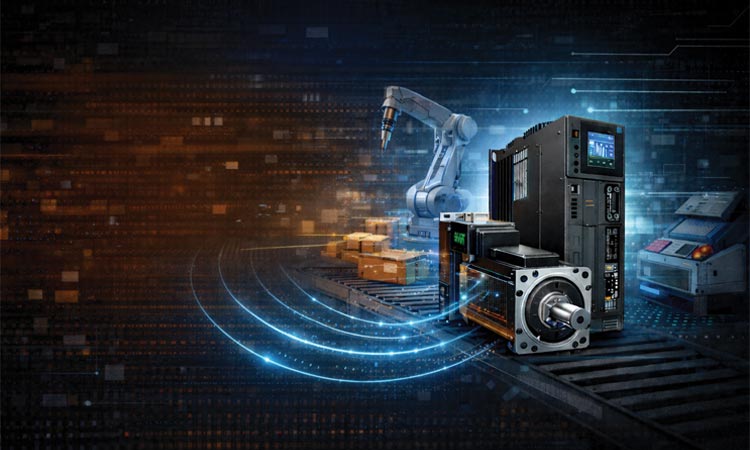
In today’s digitally driven manufacturing environment, motion is no longer merely mechanical—it is intelligent, synchronized and deeply integrated with automation architectures. At the centre of this evolution lie servo drives and programmable logic controllers (PLCs), the two pillars that orchestrate precision, speed and responsiveness across modern industry. Whether in machine tools, packaging, printing, robotics or material handling, the integration of PLCs with servo systems has transformed how machines behave, how factories are run, and how production goals are achieved. The story of automation today is essentially the story of smarter drives.
Why Drives Are Now the Heartbeat of Smart Machines
Traditionally, motion control was an isolated function—motor drives managed speed or torque, and PLCs handled logic. The communication between them was limited, often slow, and rarely coordinated at high precision.
With digitalization and Industry 4.0, drives have become far more than motor controllers. They interpret machine commands, communicate continuously with PLCs, and perform complex tasks—sometimes even taking over motion logic at the edge. The result is a new class of responsive, energy-efficient, coordinated systems that elevate machine performance in unprecedented ways.
Servo drives, in particular, have emerged as the technological heartbeat of automated machines due to:
- Extremely precise control of position, velocity and torque
- Rapid acceleration and deceleration
- High dynamic response
- Compact, high-torque-density servomotors
- Ability to support multi-axis synchronization
This combination empowers machines to work faster, smarter, and more safely.
PLC–Servo Integration: The Core of High-Performance Automation
The integration of PLCs with servo drives is no longer optional—it is a baseline requirement for advanced automation. This powerful pairing creates a closed-loop system capable of real-time monitoring, correction, and optimization of motion.
Key Benefits of PLC–Servo Integration
a) Real-time, high-speed communication
EtherCAT, PROFINET IRT, EtherNet/IP CIP Motion and other industrial protocols enable deterministic communication between PLCs and drives, ensuring synchronization at sub-millisecond speeds.
b) Multi-axis coordination
Complex machine functions—cutting, indexing, printing, pick-and-place, filling and sealing—need coordinated motion across multiple axes. Integrated servo architectures deliver this with accuracy up to microns.
c) Adaptive and intelligent control
Servo drives with embedded intelligence can adjust performance based on load variations, speed changes or environmental factors—reducing cycle times and improving output quality.
d) Distributed control for greater efficiency
Modern servo drives often carry built-in motion functions like cam profiles, electronic gearing, homing routines and safety functions.
This offloads PLCs from routine motion logic, freeing them for supervisory and system-level tasks.
e) Simplified wiring and faster commissioning
Integrated systems reduce wiring complexity and use standardized interfaces, cutting commissioning time significantly.
The end result is an automation architecture that is cohesive, powerful and easy to scale.
The Rise of Servo Intelligence
Servo drives have evolved from pure hardware controllers to intelligent devices with embedded processing power. This shift introduces new capabilities:
Machine learning at the edge
Advanced drives can detect anomalies in vibration, torque, or speed signatures. By comparing real-time data to normal patterns, they can predict failures and support predictive maintenance.
Auto-tuning & self-optimizing servos
Modern drives intelligently tune themselves—adjusting gains, damping and filters to achieve optimal motion performance based on the machine’s load and mechanical characteristics.
Energy optimization functions
Regenerative braking, dynamic power sharing across axes, and smart standby modes significantly reduce energy consumption.
Integrated safety
Safe torque off (STO), safe stop, safe speed monitoring (SSM), and safe limited position (SLP) are increasingly built into drives, reducing reliance on external hardware and simplifying machine safety design.
These innovations ensure that servos are not just actuators—they are digital assets contributing to productivity, quality, and uptime.
![Drives-Automation]() Servo-Driven Automation Transforming Key Industries
Servo-Driven Automation Transforming Key Industries
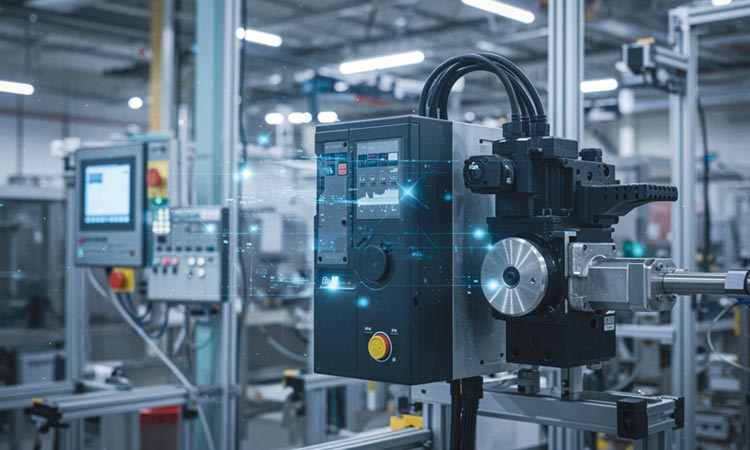 Servo-Driven Automation Transforming Key Industries
Machine tools
Servo systems enable rapid tool changes, high-speed interpolation, spindle control and axis synchronization. Advanced drive–PLC architectures elevate machining accuracy and surface finish.
Packaging & printing
High-speed pick-and-place machines, form–fill–seal systems, and labelers rely heavily on synchronized servo axes for cutting, printing, sealing and conveying.
Robotics
Collaborative robots and SCARA robots benefit from servo motors with high torque density and precise closed-loop control for smooth and safe movements.
Material handling
AGVs, conveyors and automated warehouses use servo drives for precise speed control, accuracy and energy efficiency.
Textile, pharma, food processing
Servo-driven dosing, filling, tension control and indexing improve batch consistency and accuracy.
In virtually every modern factory, servo integration is the hidden force behind speed, quality and repeatability.
Integration Challenges and How Industry Is Solving Them
While the benefits are clear, integrating PLCs and servo drives comes with its own set of challenges:
a) Complexity of programming
Motion control requires precision programming and tuning. Frameworks like PLCopen libraries & vendor-specific motion kits simplify development.
b) Compatibility issues
Not all controllers and drives talk to each other seamlessly. Industry’s move toward open standards (OPC UA, MQTT, TSN) is reducing these barriers.
c) Heat and noise management
High-speed systems generate heat and vibration. Better drive enclosures, cooling designs, and noise filters are emerging.
d) Skilled manpower availability
Training requirements are high. Automation vendors are responding with simulation tools and low-code configuration platforms.
e) Ensuring deterministic communication
Real-time protocols are critical. Manufacturers increasingly adopt Ethernet-based fieldbuses to maintain reliable multi-axis synchronization.
The industry is steadily converging on plug-and-play, software-driven integration to minimize these hurdles.
The Trend Toward Unified Automation Platforms
The future is headed toward integrated automation ecosystems where PLCs, servo drives, HMIs, robotics controllers, and safety systems operate within a single software environment.
Benefits of Unified Platforms
- Seamless engineering workflow
- Single-tag architecture for PLC, drive, and HMI
- Centralized diagnostics
- Faster troubleshooting
- Reduced total cost of ownership
- Consistency across programming environments
Manufacturers like Siemens, Rockwell Automation, Beckhoff, ABB, Mitsubishi, and Omron are championing these ecosystems with comprehensive engineering suites.
What’s Next? The Future of Servo–Drive–PLC Architectures
The next decade will see further advancements:
Hybrid motion controllers
Where servo drives take over local motion tasks while PLCs manage global machine logic.
Drive-integrated AI
Real-time optimization of speed, torque and motion profiles based on predictive models.
Software-defined machines
Hardware becomes modular; functionality resides in software blocks.
Cloud-connected drives
Enabling remote condition monitoring, lifecycle analytics and digital twins.
Mechatronic design approach
Mechanical, electrical, and software teams co-develop machines using integrated simulation tools.
The convergence of control, communication, and intelligence is reshaping what automated machines can achieve.
Conclusion
In modern manufacturing, drives are no longer peripheral components—they are the nervous system of automated machinery.
The integration of PLCs and servo drives creates intelligent, responsive and highly coordinated motion systems that transform industrial productivity. As industries demand greater flexibility, faster changeovers, predictive maintenance and higher throughput, this integration becomes the foundation upon which the future of automation will be built.
Servo–drive–PLC architectures will continue to evolve, but their central role in powering automation is clear: they turn digital commands into precise physical action, making smart factories truly come alive.