

India’s Manufacturing Sector Sets New Focus on Technology Investment
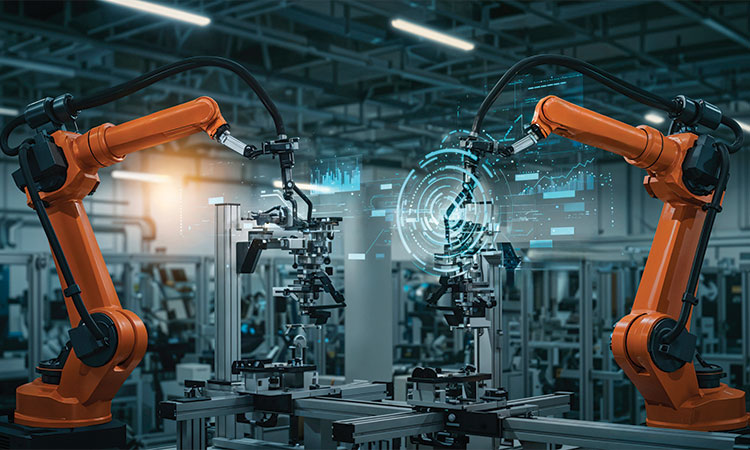
Technology has remained central to manufacturing advancement across economies for over a century. Industrial systems evolved alongside mechanical innovation, electrification, automation, and later digital intelligence. Each phase altered production methods, workforce structures, and capital deployment. As manufacturing ecosystems expanded, technology became the foundation supporting scale, accuracy, safety, and economic relevance. Across continents, factories gradually transitioned toward systems that integrate engineering discipline with data-led decision frameworks.
India’s industrial progression follows this broader arc while carrying its own distinctive pathway. During the mid-nineteenth century, industrial activity centred around textiles, jute processing, and railway infrastructure under colonial administration. These early enterprises introduced organized production and distribution systems. The post-independence phase between 1947 and 1991 expanded industrial capacity through Five-Year Plans, public sector enterprises, and capital-intensive sectors such as steel, power, and heavy engineering. This era built foundational technical capability and industrial depth.
Economic reforms after 1991 accelerated private enterprise participation, export integration, and technology partnerships. Manufacturing expanded alongside services, supported by capital inflow, modern equipment, and international linkages. Over time, shop floors shifted focus toward consistency, availability, and quality benchmarks aligned with overseas markets. Technology gradually moved closer to core operations, influencing how plants planned production, managed assets, and responded to demand.
Today, technology investment stands at the centre of manufacturing strategy. Plants operate within tighter delivery cycles, complex supply networks, and evolving customer expectations. Engineering teams rely on state-of-the-art tech to manage these variables with speed and coordination. Digital adoption strengthens visibility across operations, allowing better alignment between machines, manpower, materials, and schedules.
Key significance areas forming technology investment priorities across Indian manufacturing units include
• Automation-led systems improving throughput consistency and reducing manual intervention
• Predictive maintenance platforms monitoring equipment health and reducing downtime risk
• Energy optimisation systems supporting cost control across utilities and furnaces
• AI-enabled inspection tools identifying deviations early within production cycles
• Additive manufacturing enabling rapid prototyping and flexible component production
• Digital twin platforms supporting simulation, testing, and layout optimisation
• Data-led supply chain systems improving planning accuracy and inventory readiness
Several technologies anchor this industrial transition. Artificial intelligence supports inspection, forecasting, and equipment diagnostics. Internet of Things platforms link machines and utilities for real-time monitoring. Digital twins enable virtual simulation of assets and processes. Additive manufacturing supports rapid prototyping and complex part production. Private 5G networks enable high-capacity connectivity for robotics and secure data exchange across industrial facilities.
Manufacturing remains central to India’s ambition toward Viksit Bharat 2047. Plants across sectors adopt robotics, drones, simulation tools, and advanced automation to strengthen productivity and sustainability objectives. Technology adoption has demonstrated value across throughput improvement, resource efficiency, safety enhancement, and scalability. Industrial enterprises increasingly treat digital capability as a structural requirement across planning and execution.
Policy initiatives such as Production Linked Incentive programmes, Make in India, India AI Mission, the Digital Personal Data Protection framework, and the Skill India Mission add momentum to this transition. These measures strengthen capacity creation, workforce readiness, and digital infrastructure across manufacturing value chains. Industrial thinking gradually shifts toward sustainability and innovation-led growth. Systems earlier centred on efficiency evolve into intelligence-orientated ecosystems supported by data, connectivity, and integrated engineering platforms.
 Recent industry indicators underline the pace of change:
• Digital technology expenditure within manufacturing projected to be near 40% of total spending by 2025 (source: Press Information Bureau)
• Rapid adoption of analytics and AI across Indian manufacturing enterprises
• Strong expansion across industrial automation markets supported by robotics and control systems
• Industry 4.0 initiatives progressing beyond pilot deployments into production-scale environments
• Electronics manufacturing recording strong value addition supported by domestic capacity and export growth
• Manufacturing employment strengthening through technology-led expansion
Electronics, automotive, and solar manufacturing account for a substantial share of industrial technology expenditure. These sectors illustrate how progressive systems support scale, consistency, and international competitiveness. Technology investment enables manufacturing units to align engineering depth with evolving supply expectations across regions.
Technology evolves rapidly, altering how engineering teams design, produce, and plan industrial operations. Manufacturing units gain adaptability and operational continuity when capital planning supports long-term capability development. India’s manufacturing future holds strong potential built upon engineering skill, digital infrastructure, and supportive policy frameworks. As technology progresses, manufacturing and engineering stand positioned for sustained expansion and a stronger role in Bharat’s industrial advancement.