
Skill Development and the Role of Industry and Institutions in India

India stands at a pivotal moment in its economic journey. With one of the world’s youngest populations—more than 65% under the age of 35—the country possesses a demographic advantage that many developed nations envy. However, the true value of this demographic dividend depends entirely on the skill levels of the workforce. As technology accelerates, industries modernize, and global competition intensifies, India’s growth will hinge on its ability to develop a skilled, future-ready talent pool. Skill development, therefore, is not just a social priority—it is an economic imperative. And its success lies in the collective efforts of the government, industry, and educational institutions working cohesively to create an ecosystem where employability, innovation, and productivity thrive.
The Changing Landscape of Skills in a New India
India’s economic transformation is reshaping the nature of work. Automation, AI, IoT, advanced manufacturing, digital finance, green energy, and emerging technologies are driving demand for a new set of competencies that combine technical knowledge, digital fluency, and soft skills.
Two major shifts are underway:
- Traditional Skills Are Evolving
Mechanics, machinists, welders, technicians, electricians, and operators today must understand CNC programming, robotics, sensors, safety, and automation. Manufacturing is no longer only mechanical—it is becoming digital, connected, and data-driven.
- New-Age Skills Are Rising
From data science and cybersecurity to renewable energy technicians, drone operators, logistics managers, and EV specialists, the future economy requires an expanded skill repertoire. The World Economic Forum predicts that nearly 40% of core skills will change in most occupations within the next five years.
This dynamic environment makes continuous skill development essential.
Government Initiatives: A Strong Foundation
India has launched several flagship programmes to boost skill development at scale:
- Skill India Mission (2015) aimed at creating a skilled workforce of 400 million people.
- National Skill Development Corporation (NSDC) as a PPP model for skilling and certification.
- PM Kaushal Vikas Yojana (PMKVY) offering short-duration courses for employability.
- National Apprenticeship Promotion Scheme (NAPS) incentivizing companies to train apprentices.
- SANKALP & STRIVE programmes strengthening ITIs and vocational training infrastructure.
- Sector Skill Councils (SSCs) defining standards for 38 industry sectors—ranging from manufacturing to healthcare.
These initiatives have laid a robust foundation. But skill development cannot operate in government silos. Industry and academia remain the real growth engines.
Industry’s Role: The Core Driver of Relevant Skills
Industry is the primary stakeholder in the skilling ecosystem. It is the end-user of talent, the biggest investor in technology, and the best authority on skills needed for productivity.
1. Driving Demand-Based Skilling
Industries, especially manufacturing, auto components, machine tools, electronics, and retail, are rapidly transforming. As companies adopt automation, robotics, and data-led manufacturing, they need technicians, engineers, and supervisors who understand:
- PLC/SCADA systems
- AI-based quality inspection
- Mechatronics
- CAD/CAM
- EV assembly and battery technology
- AGVs and smart warehouses
- Lean manufacturing and TPM
Industries must articulate these skill needs clearly to institutions, SSCs, and training partners to avoid the supply-demand mismatch that persists today.
2. Workplace-Based Training and Apprenticeships
India’s apprenticeship ecosystem remains underutilized compared to global standards. Nations like Germany and Japan owe much of their manufacturing competitiveness to strong dual-training systems where students learn in classrooms and on factory floors.
Indian industries are increasingly recognizing the value of such models. By offering structured apprenticeships and on-the-job training, companies can:
- Build a pipeline of trained manpower
- Reduce recruitment costs
- Improve productivity
- Retain trained employees
- Align skills directly to their processes
Large organizations like Tata Motors, Maruti Suzuki, Bosch, L&T, TVS, and others run exemplary apprenticeship programmes that can serve as models for MSMEs.
3. Upskilling the Existing Workforce
As technology changes, the current workforce must keep pace. Industry-led skill centres, online learning platforms, and dedicated training academies are becoming essential.
Companies are now investing in:
- In-house training centres
- Skill development wings
- Cross-functional upskilling
- Multi-skilling programmes
- Leadership and soft-skill training
Without continuous learning, industries risk obsolescence and productivity stagnation.
Role of Institutions: Linking Learning with Employability
Educational institutions in India—schools, ITIs, polytechnics, engineering colleges, and universities—are central to equipping the youth with foundational and advanced skills. Their role is to create job-ready graduates who can seamlessly integrate into industry settings.
1. Revamping Curriculum for Industry 4.0
Traditional curricula are often outdated & theoretical. Institutions must integrate:
- Mechatronics
- IoT and embedded systems
- Robotics and AI basics
- Renewable energy and EV technologies
- Cyber-physical systems
- 3D printing and digital manufacturing
Course content must evolve continuously with industry inputs.
2. Strengthening ITIs and Polytechnics
ITIs remain the bedrock of vocational training in India. Modernization is key to making them truly world-class:
- Equipping labs with CNC machines, robotics kits, and electrical automation systems
- Training instructors in new technologies
- Offering micro-credentials
- Collaborating with industry for practical exposure
Polytechnics too must enhance applied learning, industry visits, and internships.
3. Promoting Industry-Academia Collaboration
Meaningful partnerships produce employable graduates. Institutions must:
- Invite industry experts as adjunct faculty
- Undertake joint research projects
- Establish Centres of Excellence in collaboration with companies
- Conduct industry-led certification programmes
- Facilitate internships and industry immersion
This ensures students gain practical experience before entering the workforce.
The Rise of EdTech and Hybrid Learning
EdTech platforms have emerged as powerful enablers of skilling. They make learning accessible, flexible, & affordable.
Popular offerings include:
- Skill-based microlearning modules
- Virtual labs and simulations
- AR/VR-based training for welding, assembly, and machine operation
- Placement-linked digital programmes
- Soft-skill and communication enhancement courses
Hybrid models—combining online theoretical learning with offline practical sessions—are bridging the gap in Tier 2 and Tier 3 cities.
Challenges That Persist
Despite progress, India’s skill ecosystem faces several challenges:
- Mismatch between supply and demand
- Low industry involvement in training design
- Shortage of qualified trainers
- Limited practical exposure in institutions
- Perception issues around vocational careers
- Fragmentation across ministries and bodies
- Rapid technological obsolescence
Addressing these issues requires a coordinated national effort.
The Way Forward: A Collaborative Skill Ecosystem
To make India the global talent hub of the future, a unified, industry-driven approach is essential.
1. Industry as Co-Creators
Industries must co-design curricula, provide equipment support, and shape standards through SSCs.
2. Institutions as Enablers
Educational institutions must focus on experiential learning, innovation labs, and entrepreneurship skills.
3. Government as the Facilitator
The government must streamline policies, incentivize apprenticeships, and strengthen accreditation.
4. Students as Active Participants
Youth must embrace continuous learning, digital awareness, and practical exposure.
5. Collaboration as the Backbone
Joint Centres of Excellence, cluster-based skilling hubs, and PPP models can scale training rapidly.
Conclusion
Skill development in India is no longer an optional initiative—it is the foundation of national competitiveness. As the world moves towards smarter manufacturing, green technologies, and digitally-enabled economies, India’s greatest opportunity lies in unlocking the potential of its young workforce.
By fostering deep collaboration between industry, educational institutions, and government, India can create an agile, adaptive, and future-ready talent pool. The synergy between these stakeholders will determine whether India becomes a global leader in innovation and manufacturing or merely a participant in the global value chain.
Skill development is not just preparing the youth for jobs—it is preparing the nation for the future.
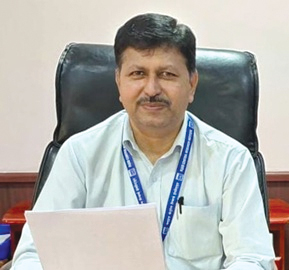 Dr. M Suresh
Director (in charge), FCRI.
Fluid Control Research Institute: Empowering Skills, Innovation, and Growth
Fluid Control Research Institute (FCRI) is dedicated to developing skilled and future-ready talent to support India’s progress towards a developed nation. FCRI offers inclusive training and orientation programs for students, young professionals, experienced industry executives, start-ups, and innovators across its core domains of flow measurement, control valves, fluid machinery, process instrumentation, and metrology.
Through accumulated expertise of its faculty, advanced laboratories and facilities, FCRI provides need based learning with balanced exposure to real industrial challenges and global standards. The participants gain practical knowledge, problem-solving skills, and industry relevance to help themselves build strong foundations and career advancement through advanced upskilling and technology-driven insights.
Through close interaction between learners, professionals, and technology developers, FCRI nurtures a practice-driven ecosystem that encourages problem solving, experimentation, and responsible innovation aligned with national priorities.